

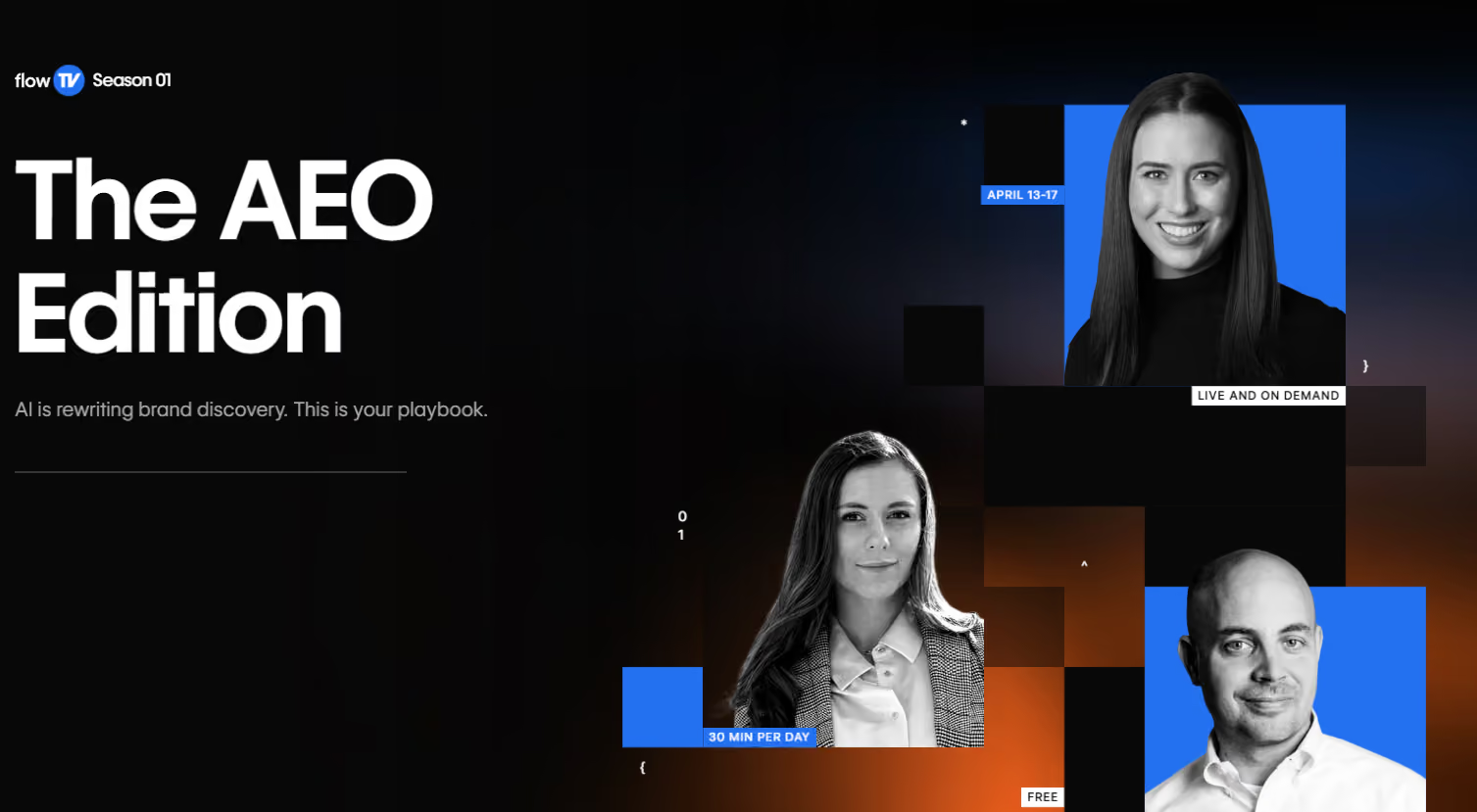
I recently watched a video series from Webflow on AI and AEO (Answer Engine Optimisation) and how they're reshaping the market right now. The series is Flow TV - The AEO Edition, it's free, you just need to register to watch. Worth watching, but if you want the short version, here are the ideas that stuck with me, pulled together from across all four videos.
One thing I'll say upfront: this wasn't a hype reel. The people speaking, including Webflow's own executives, came across as conscious and flexible about AI rather than hype-train types, which made the insights easier to trust.
Your website's job has changed
The biggest shift across the whole series: people are increasingly using AI to research products before they buy. I've noticed I do this myself.
That changes what a website is for. It's moving from being the first point of interaction to being the final piece in the research puzzle. People ask an AI to look around the web, compare other brands, form a picture of you, and then go to your site to see if what the AI is saying about you is true, or just a bunch of BS.
So your site is no longer where people start. It's where they verify. Which means it needs to back up the story AI is already telling about you — and that story is built elsewhere.
AI trusts brands that connect like a spider web
Where is that story built? Everywhere else. Marketers are looking for a new playbook to make their brand sound familiar to AI, and the pattern that works is a spider web: connections and mentions spread across different parts of the internet; LinkedIn, Reddit, Facebook, industry publications, communities.
Tied to this, marketing is becoming more P2P — people to people. Genuine human and community connections matter more than before, because the more you're mentioned and appreciated by real people in real places, the better it is for how AI sees your brand.
Try this: ask Claude or ChatGPT, "What do you know about [your brand]?" Or if you want to get more specific: "What are the top 10 brands for [your profession] in [your area]?", then talk with the AI about why you're not in the top 10, or why you're ranked 6th and not 3rd. I did this with Harvey and honestly the response was eye-opening — it showed a couple of gaps in how we show up online that we wouldn't have spotted otherwise. Takes two minutes, and tells you exactly what AI knows about you.
Write for a 60-word question, not a 3.5-word Google query
The average Google search query is about 3.5 words: "best CMS tool", while the average prompt to an AI assistant is closer to 60 words: "what's the best CMS tool that works with React and is friendly for low-technical users?"
That changes what your content needs to answer. The old approach of optimising around keywords is giving way to being more human on your site by answering full, specific, conversational questions the way you'd answer them for a person, because that's literally how the questions arrive and how AI looks for these answers now.
Webflow's own content team has even started working backwards from this — building content by thinking about what people might actually type into a prompt, rather than what they'd type into a search bar.
Simpler structure wins — for machines and humans
When Webflow redesigned their own homepage with AEO in mind, the lessons were surprisingly simple:
- Cutting back JS-heavy transitions, like carousels with more than 4 elements, made the site better for both people and AI.
- Straightforward structure and direct answers beat clever ones.
- llms.txt wasn't worth it. Putting that energy into actual content was.
- Schema helps by telling the AI what each page represents and what it should expect when crawling it
The pattern here: most of what makes a site AI-friendly is also just good, accessible web design. There's no secret machine-only layer.
Don't set and forget
One simple practice that stuck with me: pick a topic on your site each month and update or enhance it. AI systems (and people) reward content that's current. One stat that makes this concrete: around 83% of the content AI cites was updated within the last year. Stale pages barely get a look in and they work against you now that your site's job is to verify.
Where that leaves us
AI hasn't replaced the website, it has changed its job. Be mentioned widely by real people in real places, write like a human answering a real question, keep the structure simple, keep the content fresh, and every so often, ask the AIs what they think they know about you. The answer might surprise you.