
What it takes to build a social enterprise that pays its way

Why impactful businesses have to be valuable, sustainable and competitive before they can create lasting change.

Temporary placeholder: four panellists seated on stage at the RIAA Conference Australia 2026, discussing AI for responsible investors, with RIAA branding and plants in the background.
Series:
No items found.
No items found.
What it takes to build a social enterprise that pays its way

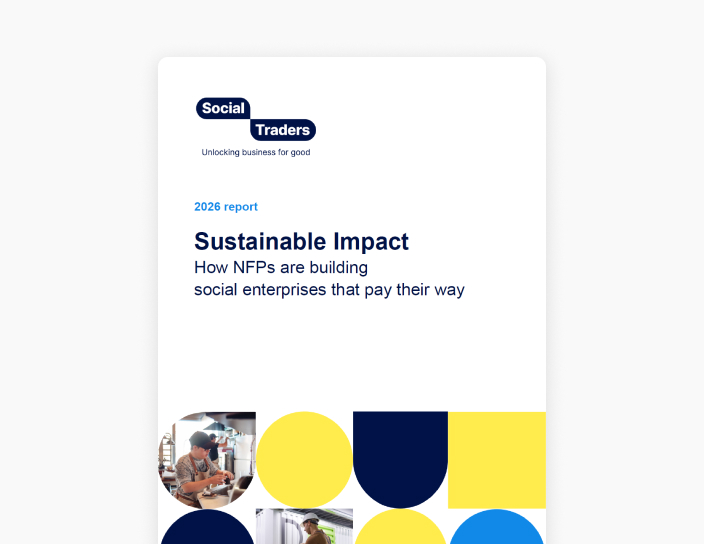
Social Traders has released Sustainable impact: How NFPs are building social enterprises that pay their way, (written by James Hornitzky and Dr Amber Earles) alongside a webinar unpacking the findings. It looks at four Australian NFPs that have built social enterprises able to generate their own trade revenue while delivering social impact.

The report is worth reading in full. It is not a formula, and it is upfront about its limitations: these are four successful case studies, not a representative sample of every NFP-led social enterprise. But its core finding aligns closely with what we see across Harvey's clients.

Impactful businesses have to provide real value, be sustainable and profitable, and compete with great products, brands and experiences. Purpose does not replace those fundamentals. It gives them a bigger reason to exist.

This is music to our ears. We encourage our clients to apply it to everything we do, from customer research and positioning to packaging, websites, eCom and marketing. A better world needs businesses that can keep going, keep improving and win customers on their merits. Three key outtakes we'd highlight:

  1. Make something people choose
  2. Build a business that lasts
  3. Compete to create mores impact

Social Traders' 2025 sector research found that 71% of social enterprises that increased trade revenue also increased their spending on impact. Trade revenue is not separate from impact. It is what allows impact to continue when grants, donations or funding priorities change.

1. Make something people choose

A mission can make someone more likely to choose you. It rarely makes up for an unclear offer, a difficult buying process or something that does not meet a real need.

The social enterprises in the report understood this. The catering business needed to deliver great catering. The HR compliance business had to be faster and easier than the alternatives. The op shops needed to be useful, welcoming places to visit. The cleaning business needed to be reliable.

KOSI is a strong example from our own work. KOSI Cocoa was created to support Solomon Islands village livelihoods and improve crop resilience. But to work, it also needed to be a drinking chocolate people would choose over established imported brands such as Milo. In-country research, product testing and packaging trials informed the flavour, product range and campaign. The result was a locally made product built around genuine customer preference, not goodwill alone.

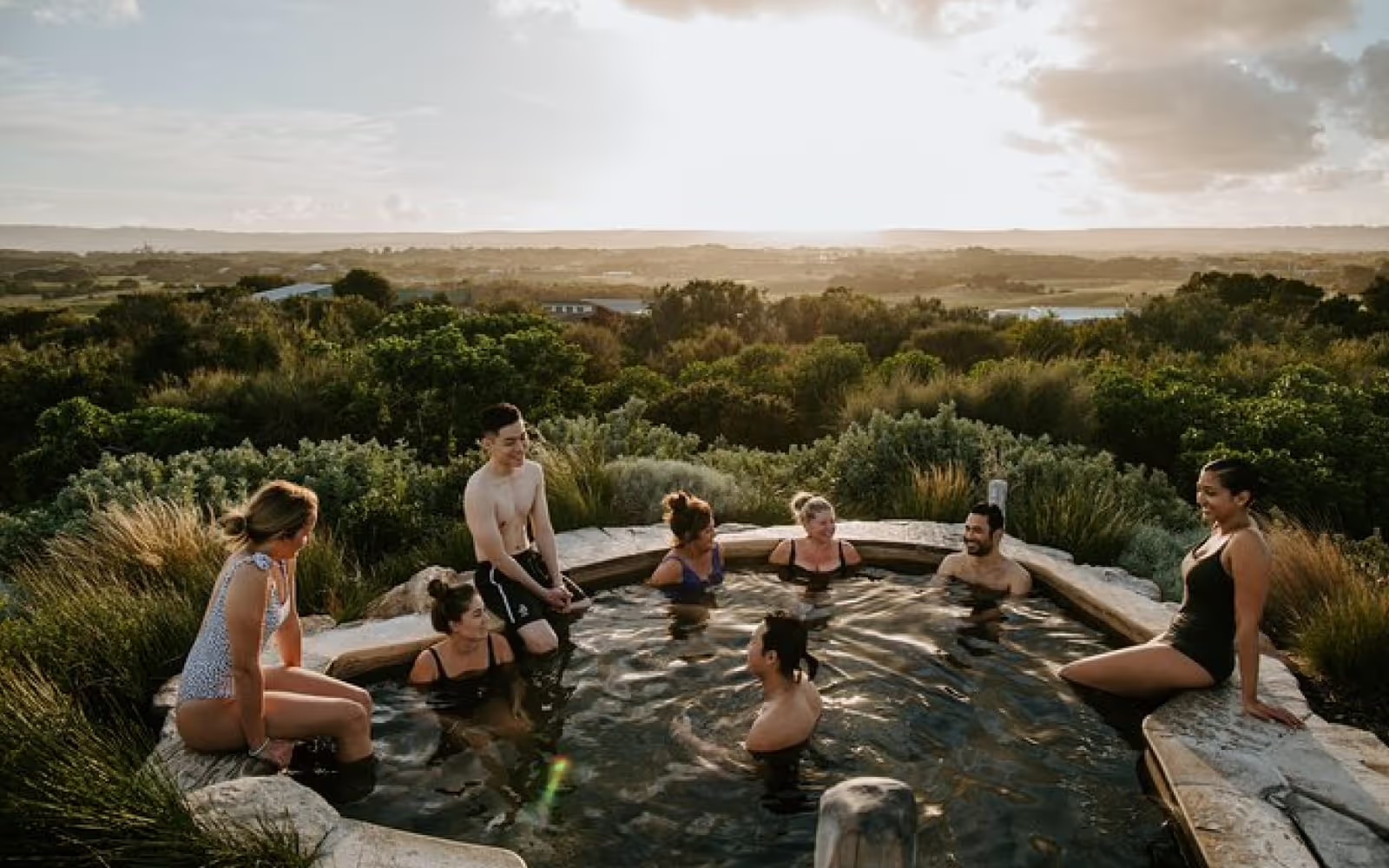
The same discipline applies to services. For Peninsula Hot Springs, research combining customer surveys with 1.7 million historical bookings helped identify distinct audiences, what they value and what stops them visiting. Those insights informed visitor experience, targeting, messaging, brand and website decisions.
Before investing heavily in a new venture or campaign, we would ask:

  • Who is the paying customer, and what are they trying to solve?
  • What do they use instead today?
  • Why would they choose this offer on quality, convenience, price or expertise?
  • Is the impact story making a good decision easier, or doing all the work?

This is where customer research earns its keep. It tests assumptions before they become expensive.

2. Build a business that lasts

The report is clear that sustainability takes time. None of the case studies reached it quickly. Leaders focused on unit economics before expanding, and funding needed to match the stage of the enterprise: seed funding to begin, then patient capacity-building funding to improve the model, systems and capability.

For employment-focused social enterprises in particular, the added cost of training, support and flexibility is part of the impact model. The job is not to remove it. It is to understand it, fund it honestly and create enough customer value to carry as much of that cost as possible.

Customer experience is part of this commercial infrastructure. A business loses money and time when customers cannot understand the offer, find the right product, enquire, book, buy or reorder easily.

With Hara, we turned a thoughtful new brand into a faster, accessible and scalable Shopify experience. Better navigation, sizing, product pages, pre-order clarity and an in-cart bundle builder make it easier for customers to buy and for the team to manage and grow the store.
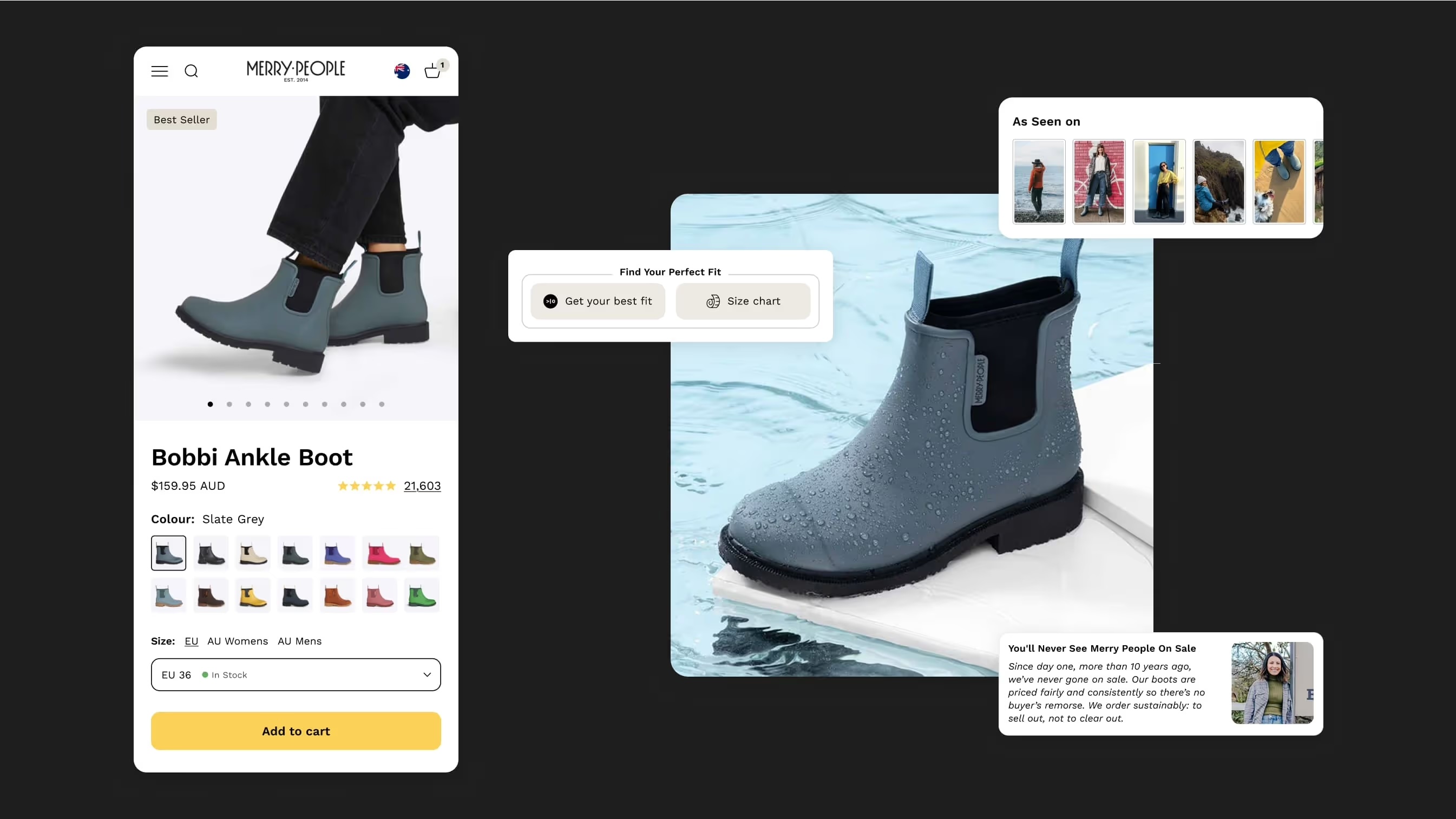
With Merry People, we have worked through years of practical eCom improvements: clearer product information, country selection, sizing support, back-in-stock alerts, checkout improvements and measurement. Merry People is not a social enterprise in the same way as KOSI or Pixii, but the commercial lesson is the same. Small, tested improvements to the customer journey can create more repeat revenue and reduce operational friction.

Tierra shows the same principle in retail. As the business grew from market stalls into a retail store and eCom, it needed a brand and packaging system that could retain its warmth and provenance while working efficiently across more than 300 rotating products. The right system protects quality while making growth more manageable.

3. Compete to create more impact

Purpose-led businesses do not need to choose between being principled and being competitive. In fact, the more clearly they compete, the more capacity they have to deliver their purpose.

Pixii is a useful example. Its purpose is advancing gender equity by making period products available in the places people work and learn. But its core customer value proposition is not just “buy from us because we are a social enterprise”. It is “Plastic-free pads & tampons made easy for organisations.” That gives workplace champions and building managers a clear, practical reason to act. The environmental and social impact, product quality, service and credibility strengthen the decision.

For The Sociable Weaver, the work was about making exceptional sustainable homes, proven performance and impact reporting easier for prospective clients to understand. A clearer brand, a more useful website and accessible evidence of environmental outcomes help the business compete in an industry where many of the most important benefits are hard to see at first glance.

That is the role of a great brand. It does not paper over a weak offer. It makes a strong offer understandable, memorable and easier to choose. It connects the commercial proposition with the wider purpose, without asking customers to decode an organisation chart or take the impact claims on faith.

The report's other lessons still matter

Social Traders identifies experienced leadership, strategic volunteers, patient funding and an evolving relationship between the parent NFP and social enterprise as the other foundations of sustainability. They are not branding or marketing problems to solve in isolation.

But they are exactly why a commercial lens matters. Good leadership needs evidence to make decisions. Volunteers need useful systems and clear roles. Funders need a credible path from investment to trade revenue. And parent organisations need a brand architecture and customer experience that makes the relationship between purpose and trade clear.

We have found these truths to hold for all of our clients. Whether the impact is village livelihoods, gender equity, healthier homes, more sustainable products or better access to wellbeing, businesses create more change when people actively choose what they offer.

If you are building, testing or growing a social enterprise and want to better understand your customers, clarify your offer or improve the path from interest to revenue, get in touch with us.


Further reading

No items found.
No items found.
No items found.

Maintain current ownership and governance

🟢
  • Harvey is 100% owned by the Smallchua Family Trust. Rebecca Smallchua is our sole Director.

Share templates, documents, insight into business for good

🟢
  • We’ve officially made all our policies and procedures publicly available here along with our past and current impact reports — sharing our lessons, tools, and insights openly. Something we’ve wanted to do properly for years and glad we finally got it sorted.
  • Maintain B Corp score from 134.1 with workers included
🟢
  • No change here. We’re up for recertification next year and looking forward to exploring the new B Corp standards. We shared our experience of recertification from the previous year here.

We’re exploring profit share, and employee ownership models with the team

🟠
  • Team feedback indicates a preference for a profit-share model rather than equity, as it is simpler, clearer and easier to manage. While there is no urgency from the team, there is interest in defining the approach in more detail. Our informal research also shows that many organisations find equity schemes complex and often less motivating in practice. What people value more is being paid properly, doing meaningful work and a healthy, supportive culture.

Be climate positive at work and at home

🟠
  • We don’t track our CO2 emissions, rather we take a much more general and high emissions view. However, this year, we didn’t donate to the environment (see above) so we can’t say we countered our CO2.

  • We continue to choose Hub as our office space for co-working who are Carbon Neutral Certified. Our overall carbon emissions are mostly contributed by our technology usage and we haven’t got a very detailed view on what that is and how to offset it.

To be updated: Donate 5% revenue to the environment

🟢
  • We delivered this as $55k of pro bono service to RIAA who are the leading industry body in Australia and New Zealand dedicated to aligning investment capital with a healthy society, environment and economy. We believe where you invest — and how you choose to use your money — has a powerful impact on people and the planet.
  • Going forward our plan is to commit 50% of profits to invest in clean tech enterprises and/or donations to charitable organisations fighting climate change.

Re-use, recycle and manage dangerous waste

🟢
  • We continue to implement our hazardous waste policy and are on a continuous learning and improvement journey.
  • We repair damaged hardware and minimise purchasing of new equipment.
  • Personally we're all Facebook Marketplace fans.

Advocate for sustainable business

🔴
  • We only did one small action this year supporting Business for 75. A coalition of organisations calling on the Australian Government to commit to at least a 75% emissions reduction target by 2035, because strong climate action is essential for Australia’s future — and good for business.
  • Sarah also personally contributed to B Local Melbourne in various ways running events and engaging the community.

Protest and boycott important issues (Australia Day, Melbourne Cup)

🟢

Buy with intention from local and discriminated groups

🟢

We continue to be intentional about our suppliers as outlined in our policy and report the details in the Community section of the report.

To be confirmed: Invest $20k in impact businesses and $20k of pro bono time

🟠
  • $0 impact investment. Over $55k 100% pro bono time.
  • We did not invest in impact businesses this year as we dedicated significantly more to probono & amazing discounts, and we didn’t have free cash on hand to do the investment.
  • We will be better at managing our impact allocations  — including impact discounts, cross-subsidies, pro bono work, donations, and investments in impact businesses or climate ETFs. 
  • The major pro bono contribution was  $55k of additional free services to RIAA who are the leading industry body in Australia and New Zealand dedicated to aligning investment capital with a healthy society, environment and economy. We believe where you invest — and how you choose to use your money — has a powerful impact on people and the planet.

Begin a Reconciliation Action Plan

🔴
  • We again looked into starting a RAP this year, but with the administrative requirements for a business of our size, we decided to focus our efforts on taking meaningful action instead outlined in our Community chapter here.

All staff spend 75%+ of their time on clients

🟠
  • Spent 66% of our time on clients. 
  • Our forecasting/financials is based on 65%, but our target is obviously higher to give us a buffer. We are happy with 66%, but will continue to aim to increase this.
  • The 34% broken down into 23% operations, 8% business development, 3% learning. Slightly more on ops, less on learning & business development (Sales/Marketing) than FY24.
  • We spent less time on admin, impact reporting, marketing, formal training & recruitment, and more on client admin, team activities, onboarding and self-learning on projects.

Regular, honest check-ins about how we feel

🟢
  • Stand ups, development sessions, watercooler chats, impact updates and more.

Targeted and clear personal growth, if we are better our clients will be

🟢
  • Continued with our personal goal setting questionnaires that ask the big questions of where we want to go and how we’ll get there. Also lots of accountability check-ins. 

Improve and increase capability across team 

🟢
  • Raising our emotional health levels through a leadership development program with Global Leadership Foundation.
  • Expanding output skills: Market research, Web design, content & copywriting, strategy & development and automation strategy.

9 day fortnights, with option for 4 day weeks

🟢
  • 60% work 9 day fortnights, 30% part-time hours, 10% standard working hours.

Gradually grow the team to 7 people

🟢
  • We ended the year getting ready to onboard our 7th team member in July 2025.
  • In FY24/25 Alex joined us as Senior Designer (Brand & Digital) and Simon Hoye came on board as Head of Technology.

No destructive clients. Revenue 10% Good, 65% Great, 25% Amazing

(Here’s what the classifications mean)

🟠
  • No destructive clients. Revenue breakdown: 6.5% Good, 59% Great, 33% Amazing
  • We were well under on Good and over on Amazing which improves impact and puts pressure on us financially. We’re now managing allocation more carefully each month.

Client survey metrics

  • 100% good value for money. (3 / 5 value for money (1 - ‘could charge less’ and 5 - ‘could charge more’)
  • 8 / 10 likely to recommend
🟢
  • All metrics are on or over target
    • 3.5 / 5 value for money
    • 8.5 / 10 likely to recommend
    • 82 NPS

$1.03m revenue (Up by 23% from FY 23/24). Ambitious, we know!

🟠
  • $916,460 - +10% YoY but under our of +23%,
  • The main reasons we didn’t hit target were scope creep and overruns as well as exceeding the Amazing impact discount.
  • Maintain B Corp score from 134.1 with workers included
🟢
  • We officially re-certified in November 2023, and are pleased to report we achieved the same score (to the decimal point). Wild! We shared our experience of recertification here.
  • Share templates, documents, insight into business for good
🟠
  • We haven't done this publicly, but when people have asked, we have shared. And we're sharing a series of things as part of this impact report.
  • Maintain current ownership and governance
🟢
  • Harvey is 100% owned by the Smallchua Family Trust. Rebecca Smallchua is our sole Director.
  • Re-use, recycle and manage dangerous waste
🟢
  • We continue to implement our hazardous waste policy and are on a continuous learning and improvement journey.
  • We repair damaged hardware and minimise purchasing of new equipment.
  • Personally we're all Facebook Marketplace fans.
  • Be climate positive at work and at home
🟠
  • We don't track our CO2 emissions, rather we take a much more general and high emissions view. However, this year, we didn't donate to the environment (see above) so we can't say we countered our CO2.
  • Advocate for climate change / inspire sustainable living
🟢
  • We hosted a panel event on Zero Emissions Day in September 2023, along with our friends at Portable, where we interviewed industry experts on the opportunity to engage with community and work towards a more sustainable future. Recording here.
  • Donate 5% to the environment
🔴
  • We didn't make the donation this year as we're revisiting our impact giving model - more details here
  • Invest $20k in impact businesses plus $20k of pro bono time
🔴
  • We delivered some pro bono time but dropped the ball and had no official measurements in place.
  • We also did not invest $20k in impact businesses, and are reviewing this goal going forward. In the last 12 months, our three Impact Investments all lost their value (Whole Kids, Pronto Bottle & Kester Black). While it's not great, we accept this is part of ambitious investing, and each had their own challenges that they couldn't quite overcome.
  • Buy with intention from local and discriminated groups
🟢
  • We continue to be intentional about our suppliers as outlined in our policy and report the details in the Community chapter of our report.
  • Protest and boycott important issues (Australia Day, Melbourne Cup)
🟢
  • Yes and yes!
  • 9 day fortnights, with option for 4 day weeks
🟢
  • 80% work 9 day fortnights, 40% part-time hours, 10% standard working hours.
  • Improve and increase capability across team
🟢
  • Raising our emotional health levels through a leadership development program with Global Leadership Foundation.
  • Expanding output skills: Market research, Web design, content & copywriting, strategy & development and automation strategy.
  • Targeted and clear personal growth, if we are better our clients will be
🟢
  • A new process for 360 feedback, plus personal goal setting questionnaires that ask the big questions of where we want to go and how we'll get there. Also lots of accountability check-ins.

Client survey metrics

  • 3 / 5 value for money (1 - 'could charge less' and 5 - 'could charge more')
  • 8 / 10 likely to recommend
🟢
  • 3.4 / 5 value for money
  • 9.2 / 10 likely to recommend

No destructive clients. Revenue breakdown: 17% Good, 59% Great, 24% Amazing

🟠
  • No destructive clients.
  • Revenue breakdown: 17% Good, 59% Great, 24% Amazing (A little over on Good and under on Great, but on target for Amazing - which is most important, so we're happy with that)
  • All staff spend 80%+ of their time on clients
🔴
  • Spent 64% of our time on clients (under). Due to team changes (recruitment, onboarding and offboarding) and extra investment in training, personal development and community engagement (e.g. B Local), we did not hit this target. On reflection, we will think 80% is too ambitious and we'll be revising to 70% going forward.
  • Regular, honest check-ins about how we feel
🟢
  • Stand ups, development sessions, watercooler chats, impact updates and more.

$994k revenue (Up $211k on FY2223)

🔴
  • $833,588. Revenue was up 6% YoY. Midway through the year, we adjusted down our target to $879k as team growth / services shifted. The main reasons we didn't hit target were scope creep and overruns, both of which we're trying to manage better with process improvements.
  • Maintain B Corp score from 134.1 with workers included
🟢
  • We applied for our B Corp re-certification at the end of this financial year and are pleased to report we achieved the same score (to the decimal point). Wild!
  • Share templates, documents, insight into business for good
🟠
  • We haven't actively done this publicly, but when people have asked, we have shared. And we're sharing a series of things as part of this impact report.
  • Maintain current ownership and governance
🟢
  • Harvey is 100% owned by the Smallchua Family Trust and Rebecca Smallchua is our sole Director.
  • Re-use, recycle and manage dangerous waste
🟢
  • We continue to implement our hazardous waste policy and are on a continuous learning and improvement journey.
  • We repair damaged hardware and minimise purchasing of new equipment.
  • Personally we're all Facebook Marketplace fans.
  • Donate 5% to the environment
🔴
  • We fell short here, we didn't make the donation. More details here.
  • Advocate for climate change / inspire sustainable living
🟢
  • Be climate positive at work and at home
🟠
  • We don't track our CO2 emissions, rather we take a much more general and high emissions view. However, this year, we didn't donate to the environment (see above) so we can't say we countered our CO2.
  • Protest and boycott important issues (Australia Day, Melbourne Cup)
🟢
  • Have a RAP, engaged stakeholders and implemented more change
🔴
  • Due to competing priorities and limited time (no lack in desire) we de-prioritised our Reconciliation Action Plan as we want to do it meaningfully and have the capacity to follow through. However, we took a few first steps outlined here.
  • Buy with intention from local and discriminated groups
🟢
  • We continue to be intentional about our suppliers as outlined in our policy and report the details in the Community chapter of our report. We took it one step further this year with a public call to pledge to audit suppliers in this campaign www.supplier-impact.com
  • Invest $20k in impact businesses plus $20k of 100% pro bono time
🟠
  • We delivered some pro bono time but dropped the ball and had no official measurements in place. We also did not invest $20k in impact businesses because of the reduced revenue with Becky on maternity leave.
  • Sarah personally donated her photography equipment valued at around $7,500 to empower a content and brand producer in the Solomon Islands.
  • 9 day fortnights, with option for 4 day weeks
🟠
  • 40% work 9 day fortnights, 40% part-time hours, 20% standard working hours.
  • Improve and increase capability across team
🟢
  • Elevated our tool nerd level. See here.
  • Expanding output skills: Market research, Web design, strategy & development, video editing, and automation strategy.
  • Targeted and clear personal growth, if we are better our clients will be
🟢
  • Lots of on-the-tools growth, structured learning through weekly Lunch 'n Learns and Intro to Programming at RMIT.

No destructive clients. Revenue breakdown: 15% Good, 60% Great, 25% Amazing (Here's what the classifications mean)

🟢
  • No destructive clients.
  • Revenue breakdown: 10% Good, 66% Great, 25% Amazing
  • All staff spend 70%+ of their time on clients
🟢
  • Spent 71% of our time on clients (over by only 76 hours).

Client survey metrics

  • 3 /5 value for money
  • 8 / 10 likely to recommend
🟢
  • 3.4 / 5 value for money
  • 8.8 / 10 likely to recommend

Maintain current revenue

🟠
  • Revenue down 16% YoY
  • Regular, honest check-ins about how we feel
🟢
  • Stand ups, development sessions, watercooler chats, impact updates and more.
No items found.
22 Bricks
ABCH
Abundant Water
ACSI
ALCA
Anantaya Jewellery
Artist Engineering
ATEC
Australian Garcli
Bank Australia
B Lab ANZ
BZE
Campervan Rental Guide
Certification O
Chaulk
Clean Focus
Client Fabric
Clockwork Films
Common Ground
Compass Studio
CPSN
Curated with Conscience
Cyclion
Dog & Bone
Envirotecture
Evee
Farm My School
Fellten
Firesticks
Fresco Secco
Gewürzhaus
Global Leadership Foundation
Goodtel
Green Collar
Hagens Organics
Hara
Hey Doodle
iDE
Interspan
Jasper Coffee
Jaunt
KingPump
KOSI
Lee Christison
Love Tribe Yoga
Lumen
LVLY
Maine Wellness
Marnie Hawson
Merry People
MIIROKO
Milkcan
MK Local Foods
Nexa Advisory
No Lights No Lycra
North West Guadalcanal Association (NWGA)
OBG
One Small Step
Orange Ninja
Pacer Digital
Parliament of Victoria
Peninsula Hot Springs
Pixii
Portable
Possible
Prisma Legal
ReCo
Responsible Investment Association Australasia
Shadowboxer
Strongim Bisnis
Studio Schools Australia
SupaGarlic
Thankyou
The Next Economy
The Salvage Yard
The Sociable Weaver
THL Tourism Holdings Limited
Tierra
Time
Whole Kids
WIRE
Yarrow Build
No items found.
22 Bricks
ABCH
Abundant Water
ACSI
ALCA
Anantaya Jewellery
Artist Engineering
ATEC
Australian Garcli
Bank Australia
B Lab ANZ
BZE
Campervan Rental Guide
Certification O
Chaulk
Clean Focus
Client Fabric
Clockwork Films
Common Ground
Compass Studio
CPSN
Curated with Conscience
Cyclion
Dog & Bone
Envirotecture
Evee
Farm My School
Fellten
Firesticks
Fresco Secco
Gewürzhaus
Global Leadership Foundation
Goodtel
Green Collar
Hagens Organics
Hara
Hey Doodle
iDE
Interspan
Jasper Coffee
Jaunt
KingPump
KOSI
Lee Christison
Love Tribe Yoga
Lumen
LVLY
Maine Wellness
Marnie Hawson
Merry People
MIIROKO
Milkcan
MK Local Foods
Nexa Advisory
No Lights No Lycra
North West Guadalcanal Association (NWGA)
OBG
One Small Step
Orange Ninja
Pacer Digital
Parliament of Victoria
Peninsula Hot Springs
Pixii
Portable
Possible
Prisma Legal
ReCo
Responsible Investment Association Australasia
Shadowboxer
Strongim Bisnis
Studio Schools Australia
SupaGarlic
Thankyou
The Next Economy
The Salvage Yard
The Sociable Weaver
THL Tourism Holdings Limited
Tierra
Time
Whole Kids
WIRE
Yarrow Build

No items found.
No items found.
22 Bricks
ABCH
Abundant Water
ACSI
ALCA
Anantaya Jewellery
Artist Engineering
ATEC
Australian Garcli
Bank Australia
B Lab ANZ
BZE
Campervan Rental Guide
Certification O
Chaulk
Clean Focus
Client Fabric
Clockwork Films
Common Ground
Compass Studio
CPSN
Curated with Conscience
Cyclion
Dog & Bone
Envirotecture
Evee
Farm My School
Fellten
Firesticks
Fresco Secco
Gewürzhaus
Global Leadership Foundation
Goodtel
Green Collar
Hagens Organics
Hara
Hey Doodle
iDE
Interspan
Jasper Coffee
Jaunt
KingPump
KOSI
Lee Christison
Love Tribe Yoga
Lumen
LVLY
Maine Wellness
Marnie Hawson
Merry People
MIIROKO
Milkcan
MK Local Foods
Nexa Advisory
No Lights No Lycra
North West Guadalcanal Association (NWGA)
OBG
One Small Step
Orange Ninja
Pacer Digital
Parliament of Victoria
Peninsula Hot Springs
Pixii
Portable
Possible
Prisma Legal
ReCo
Responsible Investment Association Australasia
Shadowboxer
Strongim Bisnis
Studio Schools Australia
SupaGarlic
Thankyou
The Next Economy
The Salvage Yard
The Sociable Weaver
THL Tourism Holdings Limited
Tierra
Time
Whole Kids
WIRE
Yarrow Build
Collaborative online whiteboard for visual brainstorming and teamwork
Productivity management tool for tasks and meetings.
ChatGPT is a generative artificial intelligence chatbot developed by OpenAI
Claude is a next generation AI assistant built by Anthropic.
WhyHive is a simple tool for data analysis.
Microsoft suite
Video calling platform for professional communications
Loom is a platform to record videos to share with your network
Beautiful, easy to manage websites built low-code
Collaborating with clients, partners and each other
Collaborative design, presentation, templates.
Highest quality data layer management for consistent tracking across all platforms.
The intuitive research tool to gather meaningful data from people
Content, design, dev and collaboration tool
Video editing, transcription
Digital commenting & feedback workflow tool
Email, docs, calendars.
Flexible data and workflow platform for content management, analytics, data management.
The benchmark in eCom customer data & marketing automation
Lean frontend toolkit to rapidly build beautiful interactive experiences.
The benchmark in eCom. Create curated, beautiful and responsive experiences - built rapidly and adapt easily.
Cross-platform user behaviour analytics
The benchmark in eCom review management, and it's built in Australia
Scalable CRM great for businesses of all sizes to manage sales, marketing, service and more.
Rapid data analysis on large scale, complex datasets
Podcast hosting and analytics platform